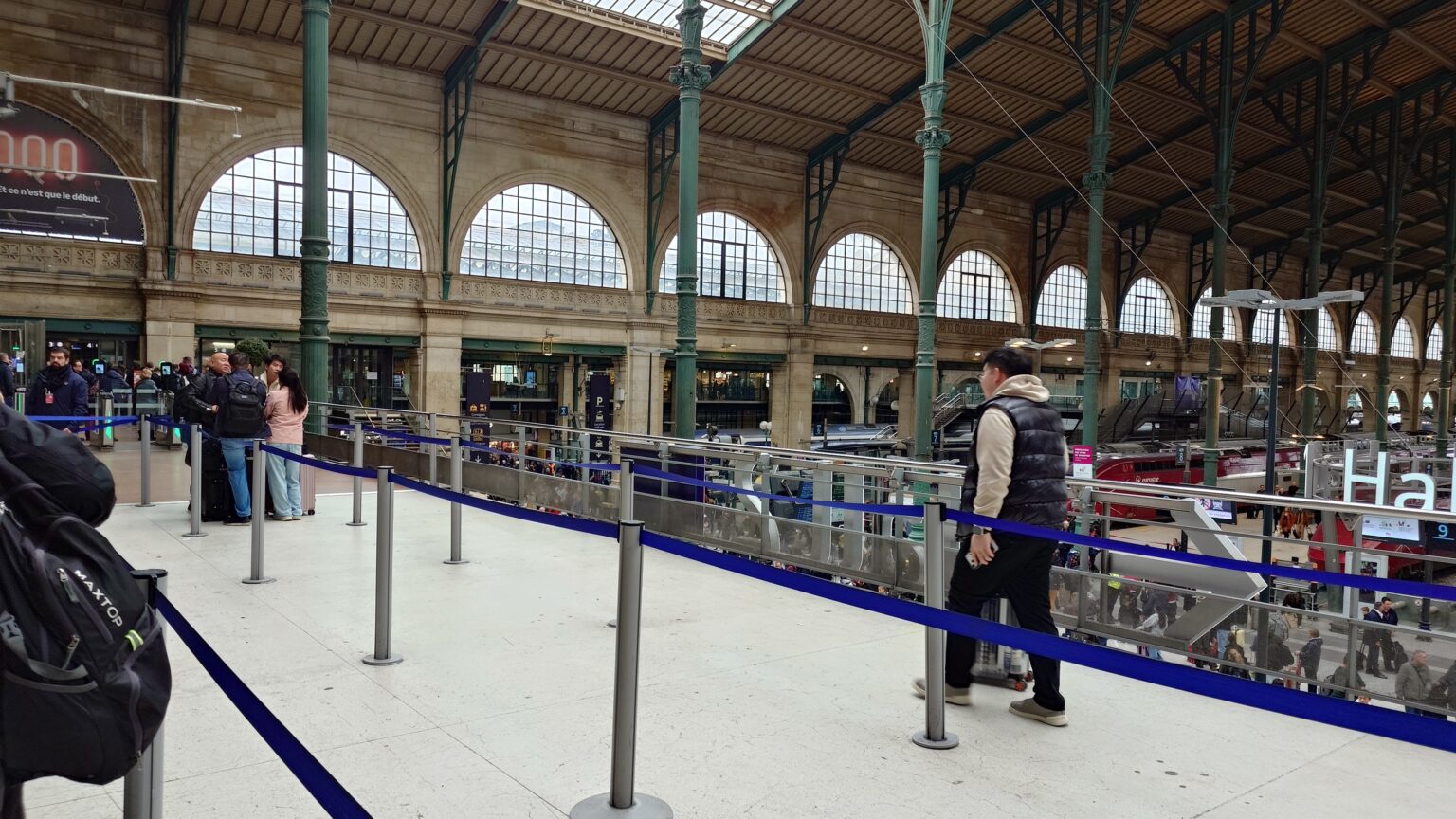
Eurostar passengers can usually bring two large bags and one small item. On London routes, each large bag can be up to 85cm on its longest side. There is normally no fixed weight limit, but you must be able to carry your bags yourself.
These rules are easier than airline baggage rules, but large suitcases can still be hard to handle. The main problem is not whether Eurostar allows your bag. It is whether you can lift it, carry it through the station, and find space for it onboard.
I travelled on Eurostar with a large suitcase during a multi-city trip in Europe. In this guide, I explain the official 2026 luggage rules, where you can store your bags, and why a 65L suitcase is usually more practical than a 90L suitcase.
- Quick Answer (If You’re in a Hurry)
- 1) Eurostar Luggage Rules Are More Flexible Than Flights
- 2) Official Allowance: Size and Number of Bags
- 3) Station Flow: What Actually Happens Before Boarding
- 4) Onboard Luggage Storage: 3 Real Options
- 5) The “90L Problem”: Allowed Doesn’t Mean Comfortable
- 6) Items to Watch: What Can Cause Trouble
- 7) Best Suitcase Choice for Eurostar Trips: 65L Wins
- 8) Booking Tools: Reduce Stress with Fast Comparisons
- Summary: Eurostar Is Easy If You Prepare Like an Adult
Quick Answer (If You’re in a Hurry)
- Eurostar luggage rules are lenient (mostly about pieces + max length, not weight).
- A 90L suitcase can be allowed, but it often destroys comfort (stairs, racks, lifting).
- For multi-city trips, 65L + a small day bag is the most reliable setup.
If you are still choosing suitcase size for a longer Europe trip, read this next: 60L vs 90L suitcase for Europe.
1) Eurostar Luggage Rules Are More Flexible Than Flights
Compared to budget airlines, Eurostar is refreshingly simple:
- No extra fee for normal luggage
- No strict weight limit (as long as you can handle it yourself)
- Rules focus on size and number of items
Security exists (X-ray), but there’s no liquids restriction like airports.
Food and drinks are fine too.
2) Official Allowance: Size and Number of Bags
For most passengers, the basic rule is:
- 2 large bags (each up to 85cm on routes to/from London)
- 1 small item (backpack, tote, laptop bag)
Important detail: 85cm refers to the longest side.
Most standard 65L suitcases fit this without drama.
(Allowance is broadly similar across Standard and Plus. Some premium tickets may offer more, but most travelers follow the 2+1 rule.)
3) Station Flow: What Actually Happens Before Boarding
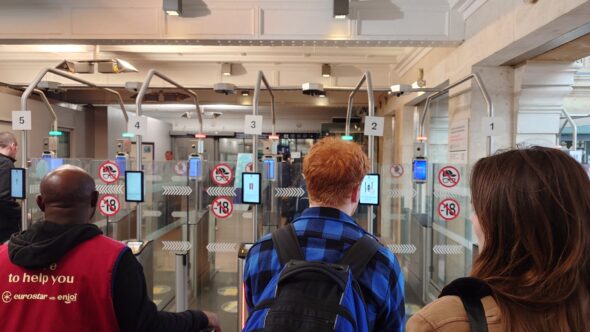
Typical Eurostar flow at the departure station:
- Check-in
- Passport check
- Exit/entry control (depending on route)
- X-ray luggage scan
The key point: arrive early.
Eurostar is a train, but the border process makes it feel closer to flying.
4) Onboard Luggage Storage: 3 Real Options
Eurostar storage is simple, but space is finite.
Option A: Large luggage racks at the end of each carriage
- Best for very large suitcases (90L-class)
- First come, first served
- If you board late, you may be separated from your bag
Option B: Overhead rack above seats
- Possible with many 65L suitcases
- You need to be able to lift it safely (this is where 90L fails)
Option C: Under-seat / foot space
- Best for backpacks and small bags
- Plus seats tend to have a bit more legroom
5) The “90L Problem”: Allowed Doesn’t Mean Comfortable
This is where travelers get tricked.
A 90L suitcase is often technically allowed, but it creates a three-part stress combo:
- It doesn’t fit overhead
- You can’t lift it easily
- Rack space can fill fast
If you’re changing cities repeatedly, you will eventually think:
“I picked the wrong suitcase.”
6) Items to Watch: What Can Cause Trouble
Typical problem categories include:
- Flammable gas items
- Knives/tools
- Oversized batteries (high-capacity power banks)
Food is generally fine, but UK border rules can be stricter for certain animal products.
Check the latest guidance if you’re carrying meat/dairy.
7) Best Suitcase Choice for Eurostar Trips: 65L Wins
After repeating real travel moves, the conclusion is boring but correct:
- 65L: best balance of capacity, lifting, stairs, and racks
- 90L: only makes sense for long stays with minimal moving days
If your trip includes multiple transfers, this setup is the most repeatable:
- 65L suitcase: liftable, more likely to fit overhead, less stair pain
- Small day bag: passport/phone/charging “quick access”
- Power + connectivity backup: don’t rely on onboard USB or station Wi-Fi
8) Booking Tools: Reduce Stress with Fast Comparisons
For multi-country travel, speed matters.
A comparison tool can reduce friction across trains/buses/planes—especially when plans change.
Before you book, seat choice is also worth checking. If you want a quieter ride or want to avoid awkward seats near toilets, carriage ends, or luggage racks, see my seat guide here: Eurostar seat guide.
Summary: Eurostar Is Easy If You Prepare Like an Adult
- The rules are simple
- The real pain comes from oversized luggage
- For most travelers: 65L + small bag is the safest choice
If this article helps you decide not only “Can I bring it?” but also “What won’t ruin my transfer day?” then it did its job.


コメント